
GOODWELL
HOW DOES IT WORK?
PFAS treatment and a solution for condemned wells | Goodwell
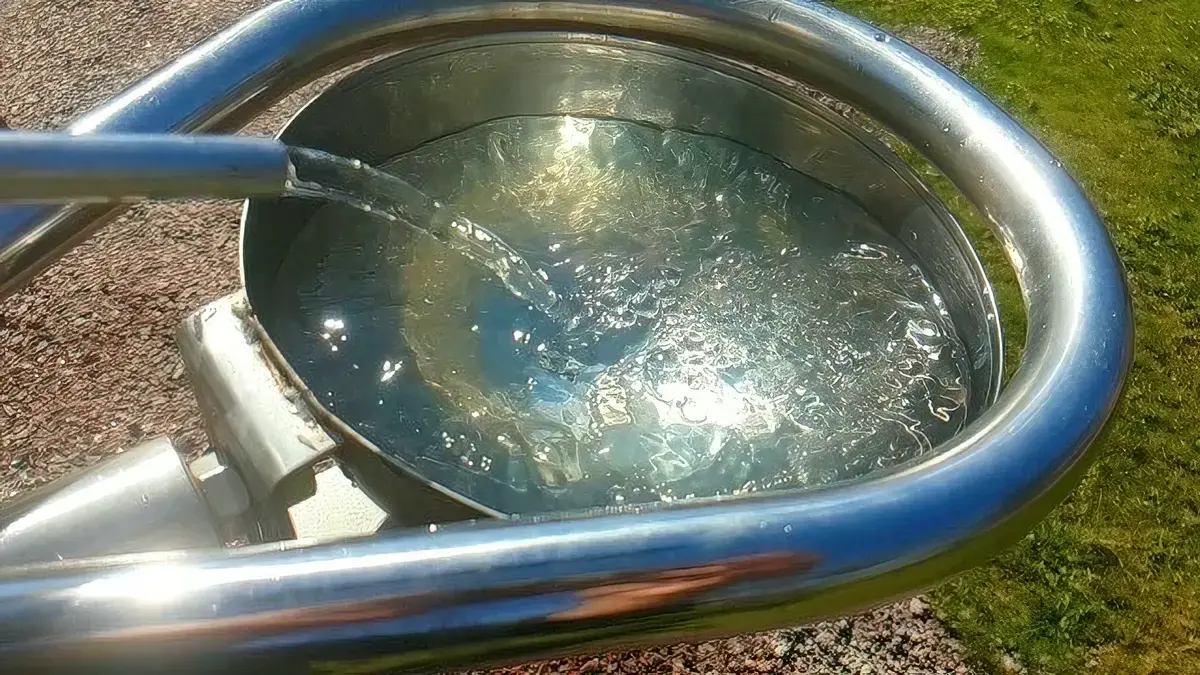
When the animal comes forward to drink, motion sensors activate so that clean, cool water is at once pumped up to the drinking bowl that sits on Goodwell's "stem".
Motion sensors
Lowers risk of disease spread between animals
Motion control lowers the risk of disease spreading between the animals compared with a muzzle-pressure valve, since the animal does not need to touch Goodwell physically to reach the water.
Why install a new Goodwell
We want here to show some of the advantages of Goodwell compared with traditional ways of supplying water to animals at pasture. According to the Swedish Veterinary Agency (SVA), "drinking water given to animals must by law be safe, that is, not harmful to people, animals or the environment" and this is not so simple in practice.
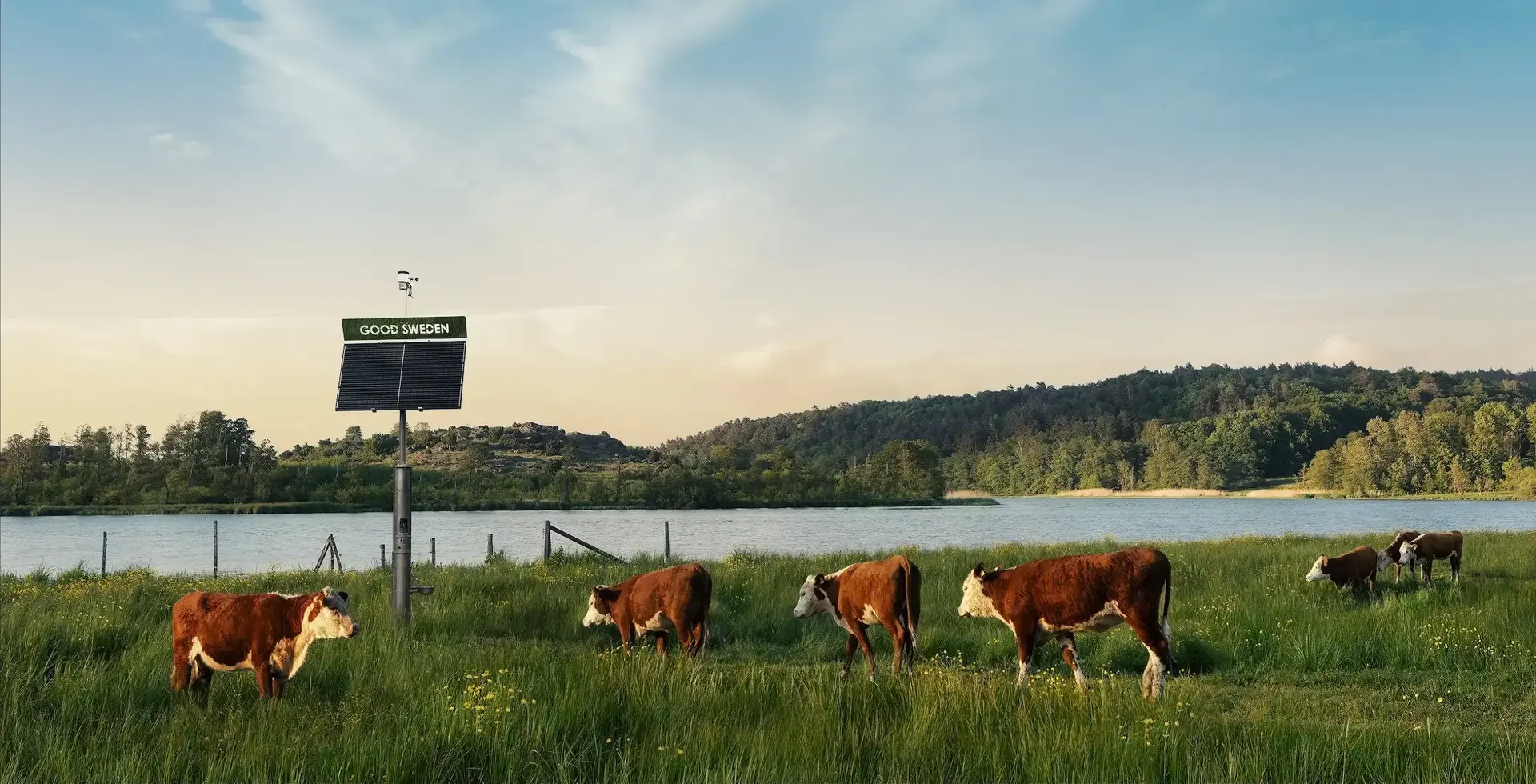
Goodwell is both cheaper and easier to install than a deep-drilled well. The water store in the original design is 1500 litres, which can readily be expanded when needed. Goodwell's patented reservoir has 9.2 m2 with 360 degree inflow, which makes recovery much faster than in other wells.
130,000
wells in Sweden are condemned – Goodwell could purify the water
Today there are about 130,000 wells in Sweden that are condemned because they have unfit water. A Goodwell could in almost every case have purified the water in the existing well, and it could have stayed in operation.
Let us look at a few different ways one can make use of:
Hauling water with a fossil-fuel vehicle
Hauling water with a fossil-fuel vehicle means an environmental impact and is, over time, a costly option once operating costs, fuel use and time spent are included. Goodwell is a one-time cost that pays for itself in a few years, if a 120 hp tractor costs about 150 per hour plus fuel and a driver.
If one chooses to fill the water in a bathtub or other open vessel, it risks becoming warm in summer because of the high outside temperature. When the water gets warm, the growth of bacteria increases. Add grass, flies and other debris that collect on the surface, and it is not an optimal option if one wants healthy animals.
Hoses
If one uses a buried hose, it must be cleaned with antibacterial fluid several times a year to counter bacterial growth. If for some reason it breaks and starts to leak, there is a risk that it drains the well that supplies it with water. When there is a risk of frost, one must also empty the hose so it does not freeze and burst.
Natural water sources
In ponds or similar natural water sources the water is often stagnant, which can lead to the animals getting diseases because of bacteria, viruses or parasites.